
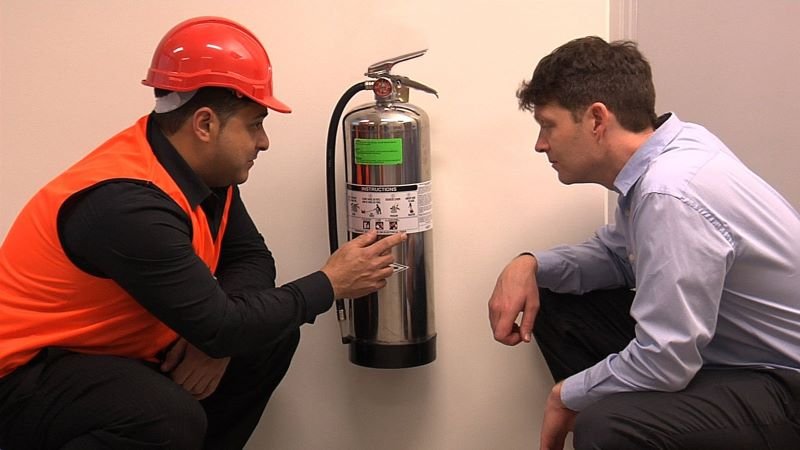
A fire risk assessment protects a building only when its recommendations are carried out. Prioritise the action plan, confirm the scope of each repair, use competent contractors and keep a clear record of every completed fix. Stratos Group manages confirmed fire safety remedial works for landlords, managing agents and businesses, carried out by vetted specialist contractors.
What a fire risk assessment action plan contains
A fire risk assessment (FRA) report identifies the fire hazards in a building, who could be harmed and what needs to change. The action plan lists the recommendations the building owner or manager is expected to act on.
Most action plans include:
- The finding: what the assessor saw, for example a fire door that does not close fully.
- The location: the floor, flat, corridor or room affected.
- A priority rating: how urgently the issue should be dealt with.
- A recommended action: what needs repairing, replacing or installing.
In England and Wales, the Regulatory Reform (Fire Safety) Order 2005 places duties on the “responsible person” for most non-domestic premises and for the common parts of multi-occupied residential buildings. Since the Fire Safety Act 2021, those duties also cover the structure, external walls and flat entrance doors of buildings with two or more sets of domestic premises. The duties include acting on the findings of the fire risk assessment. This article is general information, not legal advice.
How to turn a fire risk assessment into practical work
Turning an assessment into completed work takes five steps: prioritise, define the scope, choose contractors, carry out the works and record the results.
Step 1: Review the action plan and confirm priorities
Start by reading every item in the action plan, then follow the priorities and timescales your assessor has set for each one. How urgent a finding is depends on the building, its layout, its occupants and how it is used. Issues such as damaged fire doors, failed emergency lighting or gaps in fire stopping can be urgent in one building and less pressing in another, so none of them should be given a general priority rating.
Record each item’s priority and timescale exactly as your assessor states it. If a finding or its priority is unclear, or a timescale looks hard to meet, ask the assessor before any work begins. Do not downgrade or delay an item yourself. A clear finding leads to a clear quote.
Step 2: Confirm the scope of each repair
A repair scope is a written description of exactly what work will be done, where and to what standard. Without one, quotes cannot be compared and completed work cannot be checked.
For each action, write down:
- The location and the item affected (for example, “third-floor corridor, door to flat 12”).
- The work required: repair, replace, install or seal.
- The standard or specification the assessor expects, where one is named.
- Any access needs, such as notice to tenants or times when work cannot take place.
Some findings need a survey or a closer look before the scope can be fixed. For example, a note about suspected gaps in compartmentation may need an inspection to find every opening.
Step 3: Choose suitable contractors
Fire safety work should be carried out by competent people. Competence means the right training, experience and, where relevant, third-party certification for the specific type of work.
When comparing contractors, ask:
- What fire safety and electrical work have they done on similar buildings?
- Which certifications or accreditations apply to the work, and can they show proof?
- Will the quote describe the scope item by item?
- Will they supply certificates, photographs and completion records?
- Can they coordinate several trades, such as door fitters, electricians and fire stopping specialists?
Using one coordinating company for a multi-trade action plan reduces the number of people you need to manage and keeps the paperwork in one place.
Step 4: Schedule and carry out the works
Sequence the work by priority and plan around residents, tenants and business operations. Urgent items come first, and items in the same area are best grouped into one visit.
Good practice during works:
- Give occupiers clear notice of when and where work will happen.
- Keep escape routes clear and protected while work is under way.
- Where a fire safety system is temporarily out of action, put interim measures in place and tell the people affected.
- Check completed items against the agreed scope before sign-off.
Step 5: Document completed repairs
Undocumented work is hard to prove. Keep a record for every action so you can show what was fixed, when and by whom.
A useful completion record includes:
- The original finding and its reference number from the assessment.
- The date the work was completed and who carried it out.
- Before-and-after photographs.
- Any certificates, test results or product details supplied by the contractor.
- The invoice or works order.
Store these with the fire risk assessment and your fire safety log book, and update the action plan to show each item closed. Then let your assessor know about significant changes, as the assessment itself may need reviewing. An assessment should also be reviewed regularly and whenever the building, its use or its occupants change.
Common fire safety remedial works and what they involve
Remedial works are the repairs and upgrades that correct the issues found in an assessment. These are some of the most frequent items in an action plan.
| Typical finding | Remedial work | What it achieves |
|---|---|---|
| Fire doors damaged, poorly fitted or missing closers | Fire door repair, replacement or installation | Slows the spread of fire and smoke between areas |
| Gaps around pipes, cables or in walls and floors | Fire stopping and compartmentation works | Keeps fire and smoke within the area where it starts |
| Faulty or missing detection | Fire alarm installation and repairs | Gives early warning to occupants |
| Emergency lights failing or absent | Emergency lighting installation and repairs | Lights escape routes if the mains power fails |
| Extinguishers missing or out of service | Extinguisher supply and installation | Allows small fires to be tackled safely |
| Missing or unclear safety signs | Fire safety signage installation | Helps people find exits and equipment |
If an action plan includes fire doors, our guide on fire door repair or replacement explains what landlords should consider.
How Stratos Group handles confirmed remedial works
Stratos Group manages the remedial works once your action plan has been confirmed. We take the findings you want actioned, set out the scope and arrange for the work to be carried out by vetted specialist contractors, with relevant credentials checked where required. You deal with Stratos Group from quotation to completion.
What that means in practice:
- We work from your confirmed findings. You share the action plan and we quote against the items you want carried out.
- We define the scope. Each quotation sets out the work item by item, so you know what is included.
- We coordinate the trades. Fire doors, fire stopping, alarms, emergency lighting, extinguishers, signage and related electrical work are all within our fire safety and electrical services, and we co-ordinate the specialists so you have one point of contact.
- We keep communication clear. You are told what is happening, where and when.
- We support your record keeping. Completed work can be recorded against the original action plan items so your file stays up to date.
Stratos Group works with residential and commercial property owners, landlords, managing agents, housing providers and businesses. If a finding needs clarification, we recommend checking with your assessor first, so the right work is priced.
Mistakes to avoid after a fire risk assessment
- Filing the report without acting. An unactioned report does not reduce risk, and it can count against you if something goes wrong.
- Accepting vague quotes. Without an item-by-item scope, you cannot compare prices or confirm the work was completed.
- Skipping competence checks. Ask for proof of competence and any relevant certification for the specific work.
- Not recording the repairs. Keep evidence for every closed item.
- Ignoring the review date. Assessments need updating over time and when circumstances change.
Frequently asked questions
What should I do first after receiving a fire risk assessment?
Read the action plan in full and sort the items by the priorities and timescales your assessor has given. Deal with the most urgent items first, and ask your assessor to clarify anything that is unclear.
Who is responsible for acting on fire risk assessment recommendations?
In England and Wales this is the “responsible person” under the Regulatory Reform (Fire Safety) Order 2005, usually the building owner, landlord, employer or whoever controls the premises. If you are unsure who that is for your building, seek professional or legal advice.
How long do I have to complete remedial works?
Your assessor sets a timescale for each action, based on the risk in your building. Follow those timescales. If one looks unworkable, discuss it with the assessor rather than delaying the work.
Do I need a contractor to carry out fire safety remedial works?
Most remedial works, such as fire doors, fire stopping, alarms and emergency lighting, call for competent specialists. Some simple tasks, such as clearing escape routes, can be handled in-house.
How do I prove that remedial works were completed?
Keep a dated record for each item, including photographs, contractor certificates, test results and invoices. Link each record to the original action plan reference and update your fire safety log book.
Does Stratos Group carry out fire risk assessments?
No. Stratos Group does not carry out fire risk assessments. We manage the remedial works that follow one, such as fire door repairs, fire stopping, fire alarm and emergency lighting works, extinguishers and signage.
Can Stratos Group quote for several types of work at once?
Yes. Fire safety, electrical and property maintenance works can be quoted together, which suits action plans that cover several trades.
Next steps
If you have a completed fire risk assessment and need the remedial works carried out, send us the action plan through our quote form, including the property type, the number of floors and flats or rooms, and any specific issues. We cover London and selected surrounding areas; see areas we cover.